B.qual
How can we include visually impaired people and foster communication and exchange through games?
Teammates:
Nicola Veith, Constantin Schott, Titus Kollmann, Kayoung Ahn, Merve Kanbir
Time:
14 weeks | 4th semester
My Role:
concept, prototyping, usertesting, user research
B.qual
How can we include visually impaired people and foster communication and exchange through games?
Our concept envisions a future where people can fully understand and manage their data, protect their privacy, and consciously support data-driven innovation. Today, fragmented cookie banners and complex regulations hinder personal data control.We combine transparency and usability to make data management simple and secure. With physical AI, personal data becomes tangible, accessible and interactive.
Teammates:
Nicola Veith, Constantin Schott, Titus Kollmann, Kayoung Ahn, Merve Kanbir
Time:
14 weeks | 4th semester
My Role:
concept, prototyping, usertesting, user research
The Problem: Distance Through Discomfort
The Problem: Distance Through Discomfort
At first, we thought the biggest challenge for visually impaired people was navigating cities or poor signage. But after meeting with a local group of blind and visually impaired individuals, we realized the real issue lies in how sighted people interact with them.
Many avoid contact out of discomfort or fear of doing something wrong. What’s meant as politeness—stepping aside, not offering help—often creates social distance. One woman told us her friends sometimes avoid her on the street, not even saying hello.
We asked ourselves:
How can we create opportunities for understanding disabilities—to break down social barriers, not just physical ones?
At first, we thought the biggest challenge for visually impaired people was navigating cities or poor signage. But after meeting with a local group of blind and visually impaired individuals, we realized the real issue lies in how sighted people interact with them.
Many avoid contact out of discomfort or fear of doing something wrong. What’s meant as politeness—stepping aside, not offering help—often creates social distance. One woman told us her friends sometimes avoid her on the street, not even saying hello.
We asked ourselves:
How can we create opportunities for understanding disabilities—to break down social barriers, not just physical ones?
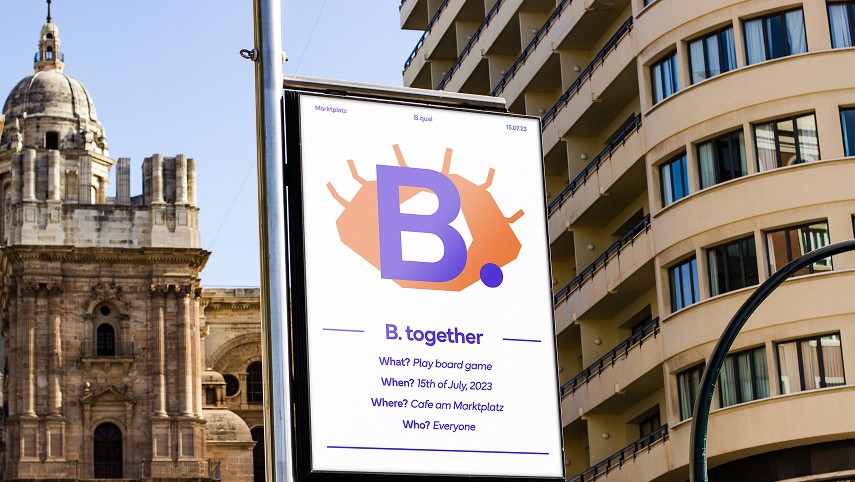
The idea of a board game café felt like the perfect fit. These places already exist as welcoming, casual environments. Over a game or a cup of coffee, conversation flows easily. It’s not about helping or being helped—it’s about being together. Through play, real connection, conversations and mutual understanding can grow—without forcing it.
Our Approach:
Our Approach:
Creating Space for Genuine Encounters
Creating Space for Genuine Encounters
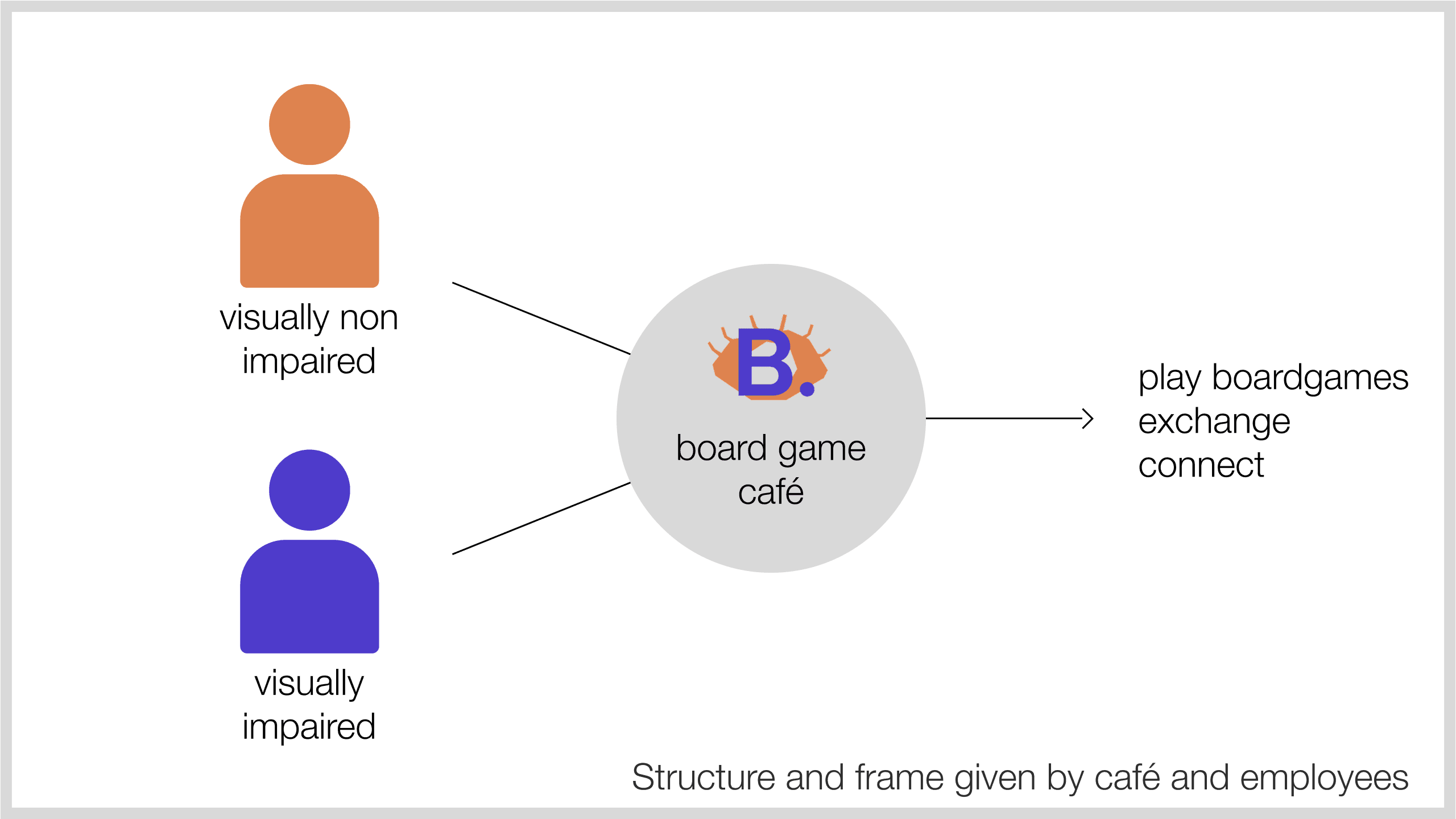
We wanted to create a space where blind, visually impaired, and sighted people could meet naturally—without pressure, without appointments. A place people visit voluntarily, where connection can happen through shared activity.
The idea of a board game café felt like the perfect fit. These places already exist as welcoming, casual environments. Over a game or a cup of coffee, conversation flows easily. It’s not about helping or being helped—it’s about being together. Through play, real connection, conversations and mutual understanding can grow—without forcing it.
We wanted to create a space where blind, visually impaired, and sighted people could meet naturally—without pressure, without appointments. A place people visit voluntarily, where connection can happen through shared activity.
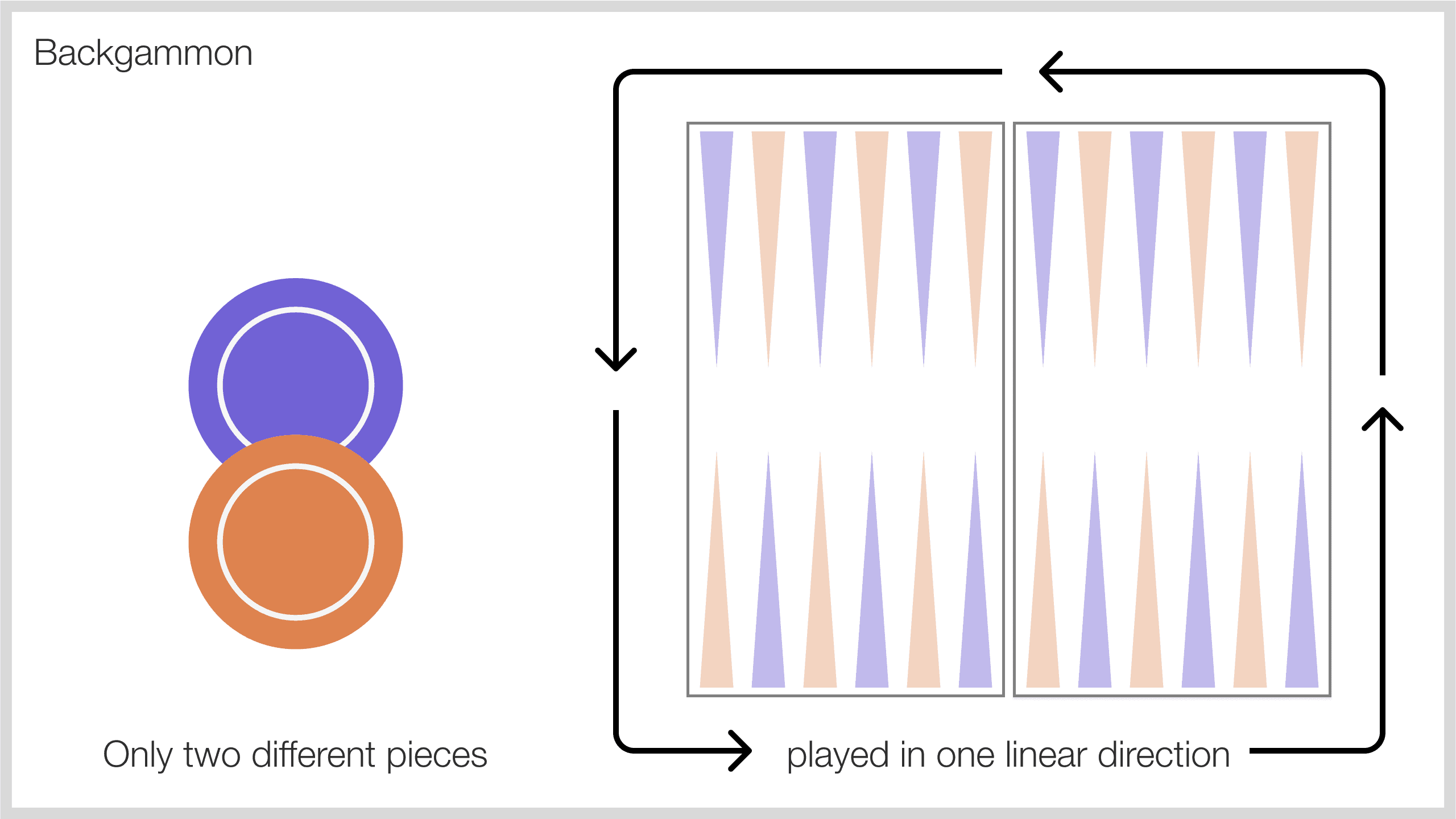
Backgammon offered an ideal foundation. It’s linear, direction-based, and involves only two types of pieces. That makes it easier to track positions through haptics, while still providing strategic depth.
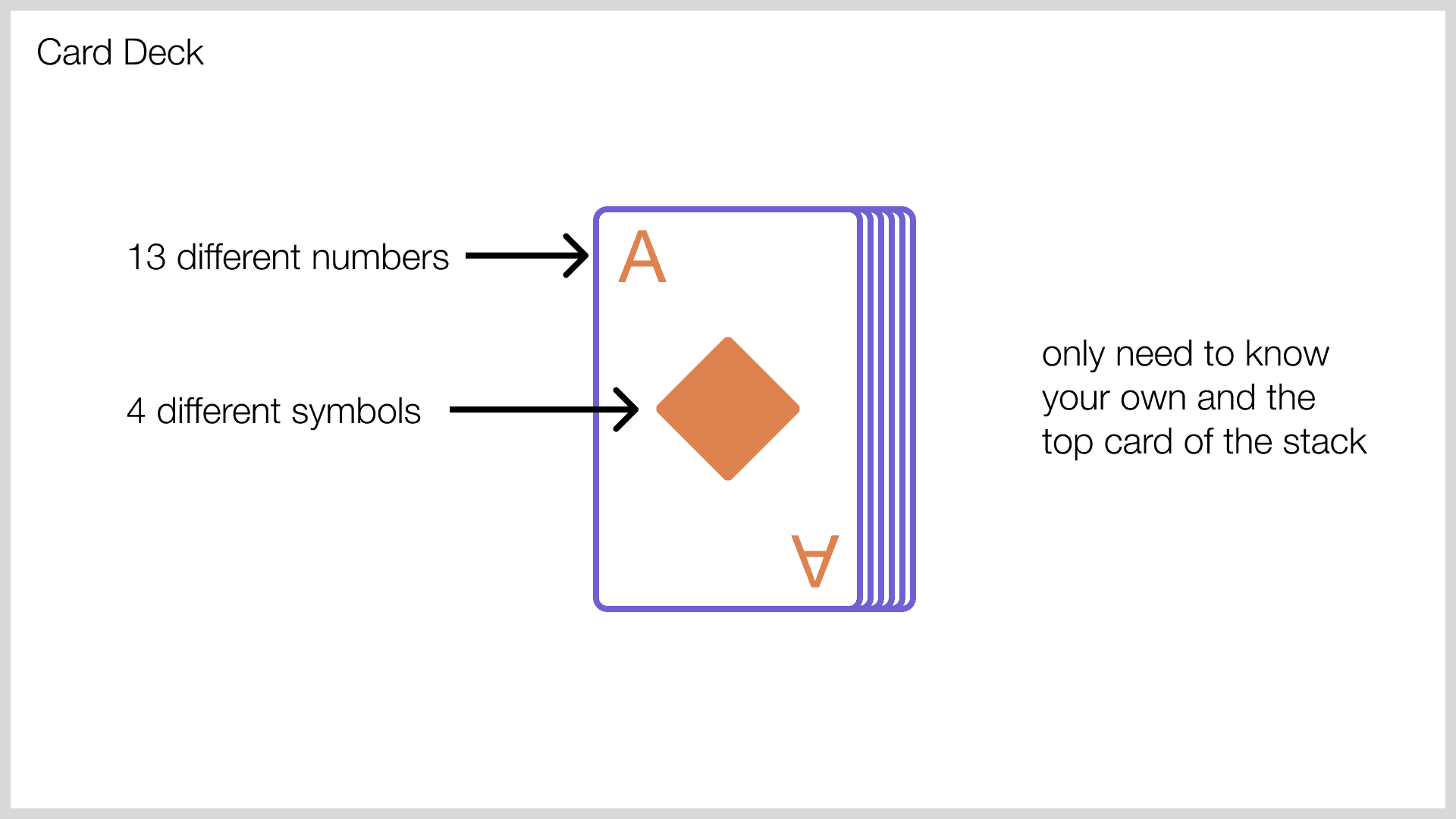
We also redesigned a classic 52-card deck, which unlocks a wide range of games. Card games are typically easy to learn, social, and adaptable—perfect for informal interaction across different levels of visual ability.
Design Challenges
Design Challenges
Designing something that works equally for blind and sighted users is not a matter of simply “adding Braille”. We needed to rethink games so they communicate through both touch and sight, without compromising either experience.
A key challenge: many board games require visual overview. But for blind players, exploring the board by touch must not disturb the game state—nothing should shift or tip over. The layout also needs to stay clear and predictable to avoid confusion while feeling around.
Backgammon offered an ideal foundation. It’s linear, direction-based, and involves only two types of pieces. That makes it easier to track positions through haptics, while still providing strategic depth.
We also redesigned a classic 52-card deck, which unlocks a wide range of games. Card games are typically easy to learn, social, and adaptable—perfect for informal interaction across different levels of visual ability.
Designing something that works equally for blind and sighted users is not a matter of simply “adding Braille”. We needed to rethink games so they communicate through both touch and sight, without compromising either experience.
A key challenge: many board games require visual overview. But for blind players, exploring the board by touch must not disturb the game state—nothing should shift or tip over. The layout also needs to stay clear and predictable to avoid confusion while feeling around.
Outcome
Outcome
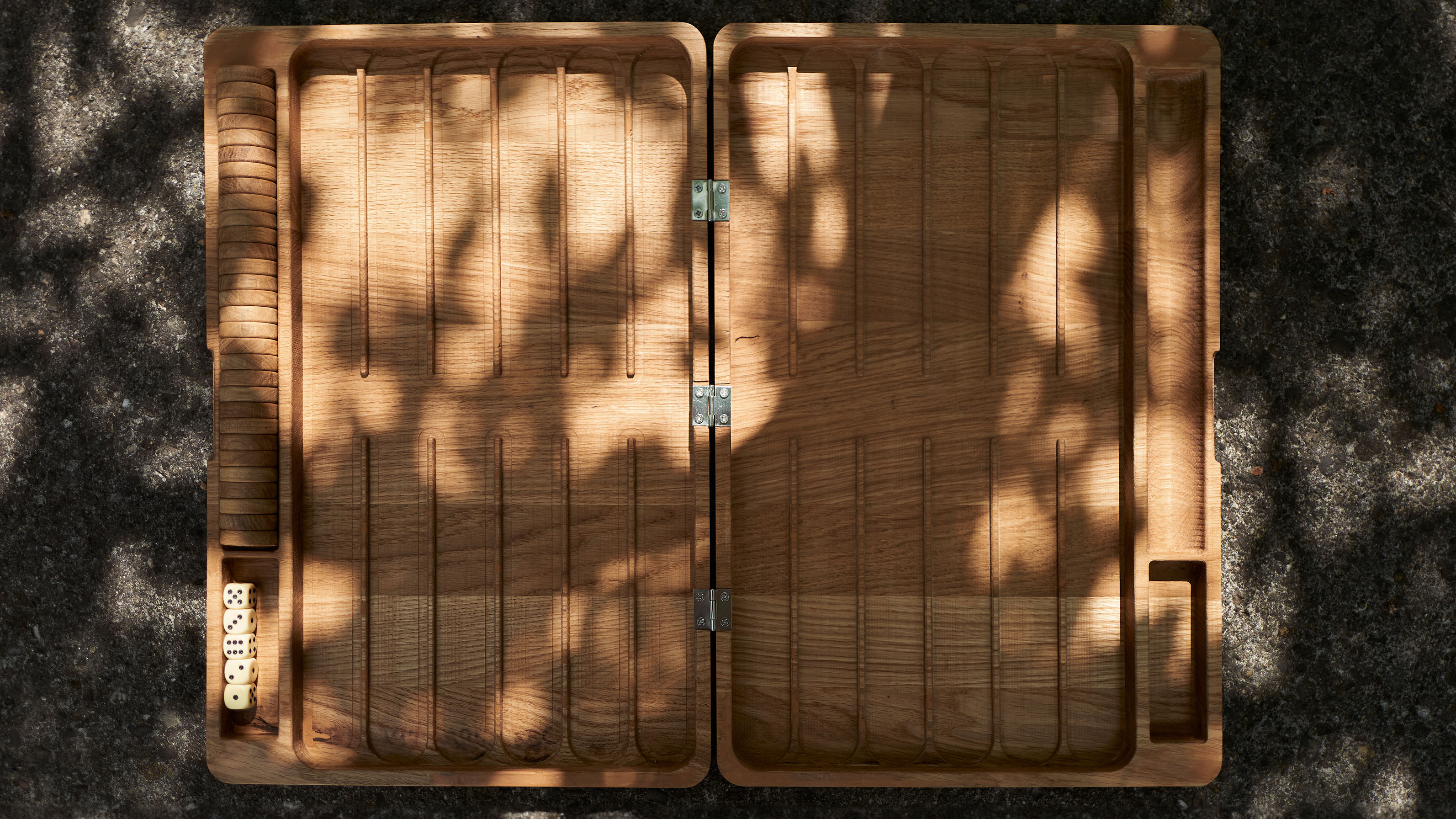
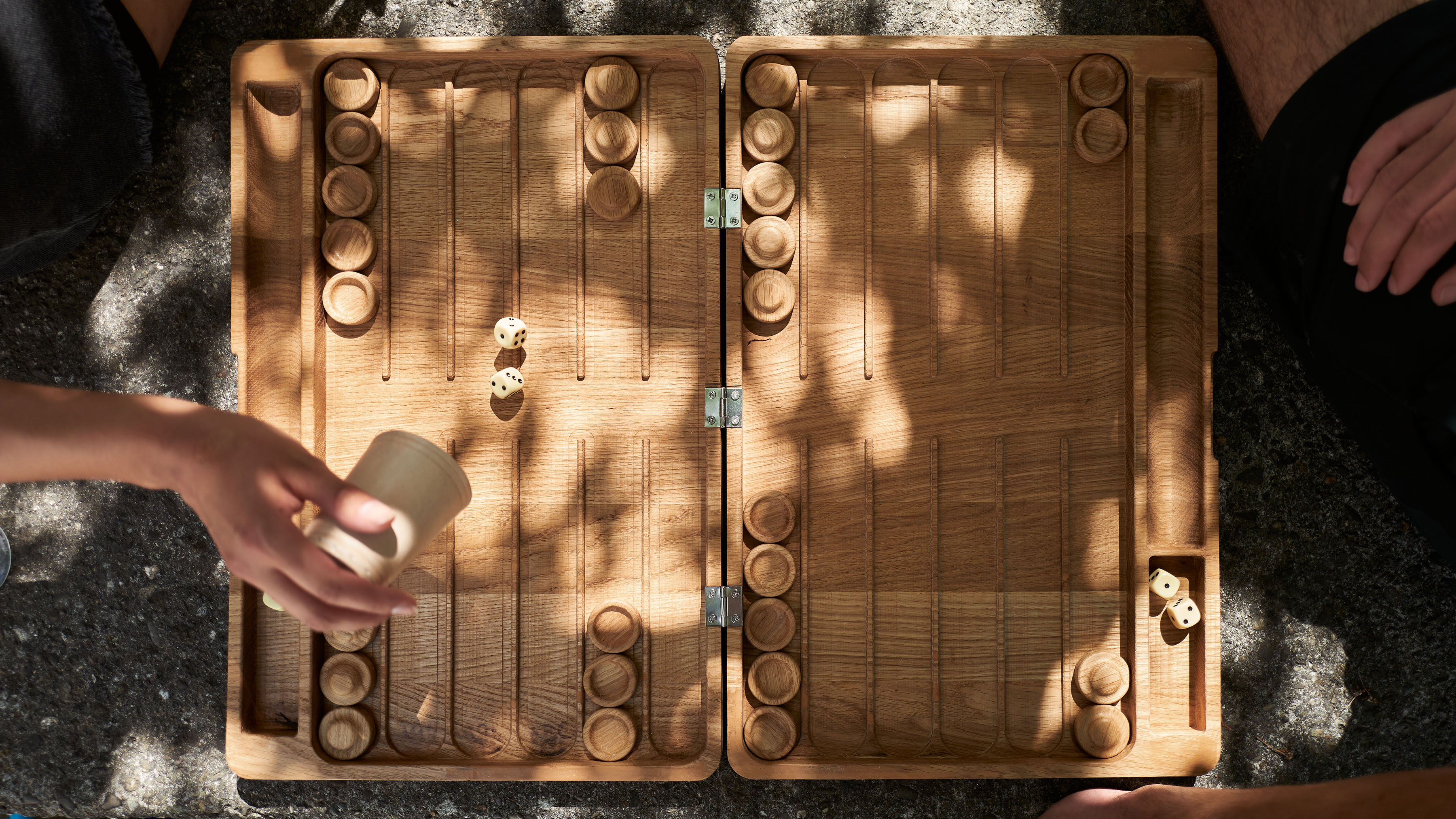
The Backgammon board is crafted primarily from wood, offering a warm, tactile feel with a refined, timeless aesthetic. To ensure that the game is fully playable by touch, we designed the two sets of pieces with distinct surfaces:
One set is concave, the other convex—making them easily distinguishable without sight.
The board itself is divided into fields using subtle wooden rails. These not only visually separate the spaces but also keep pieces from shifting as players explore the surface by hand. This allows blind users to orient themselves freely and confidently without disrupting gameplay.

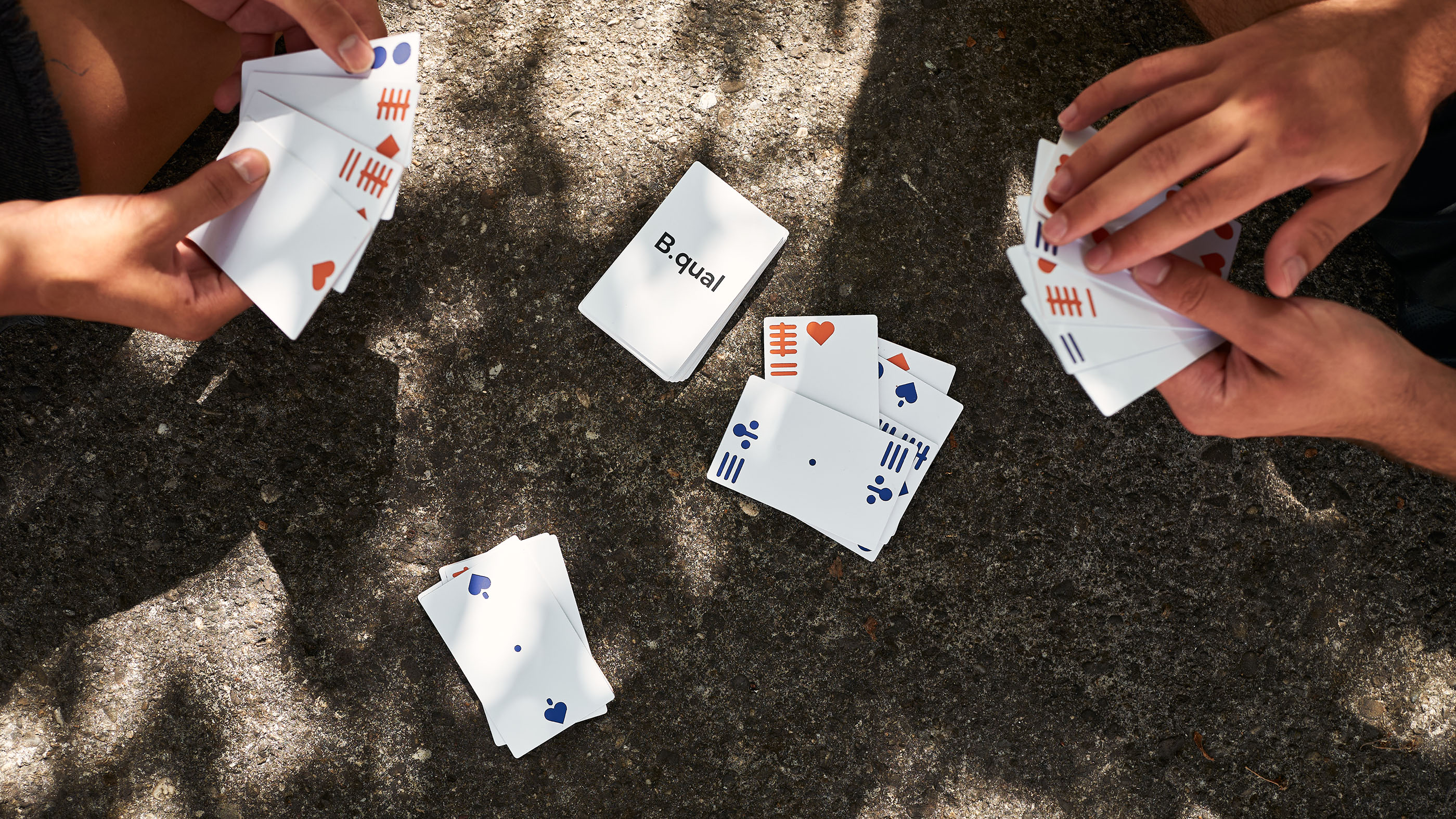
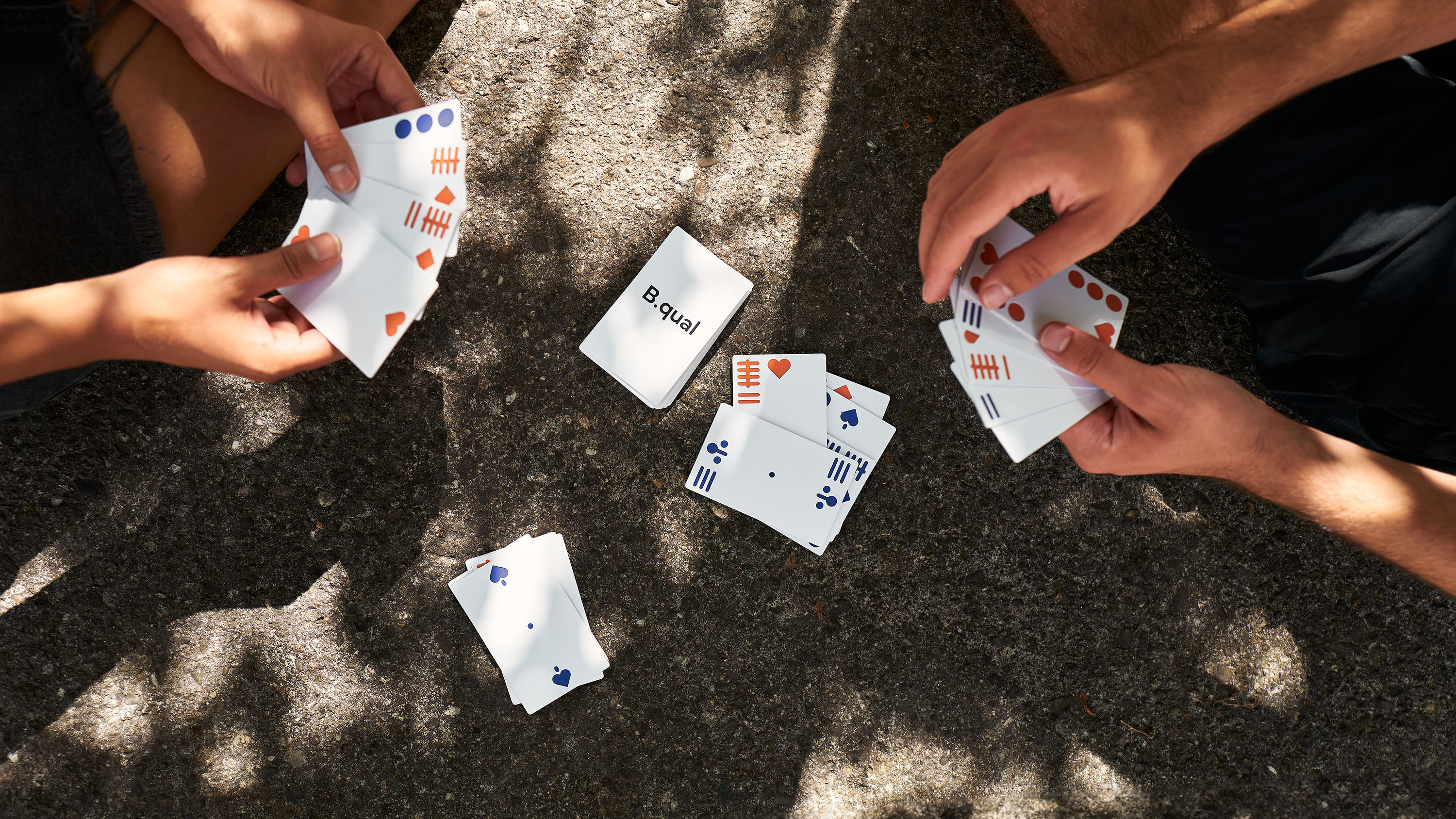
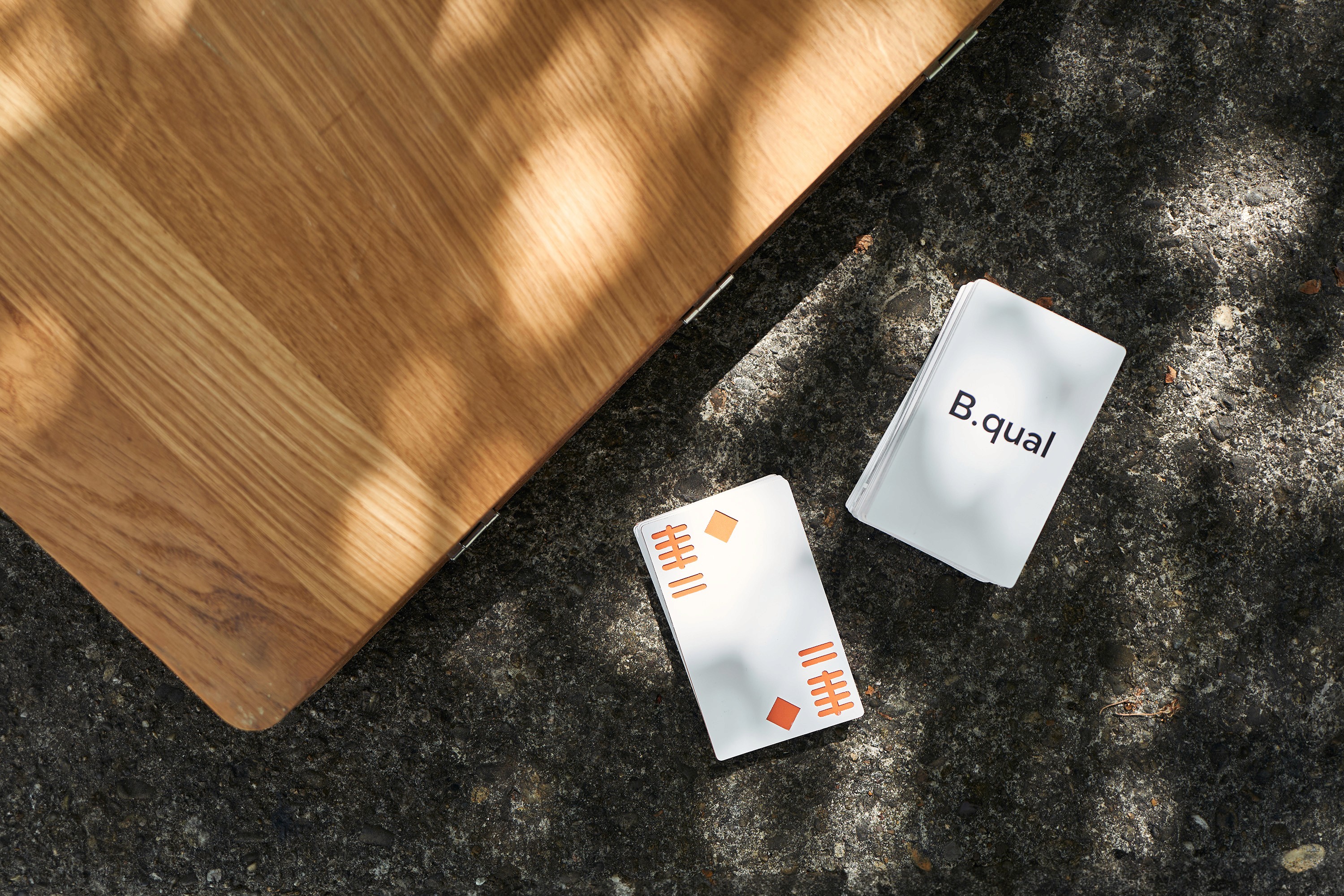
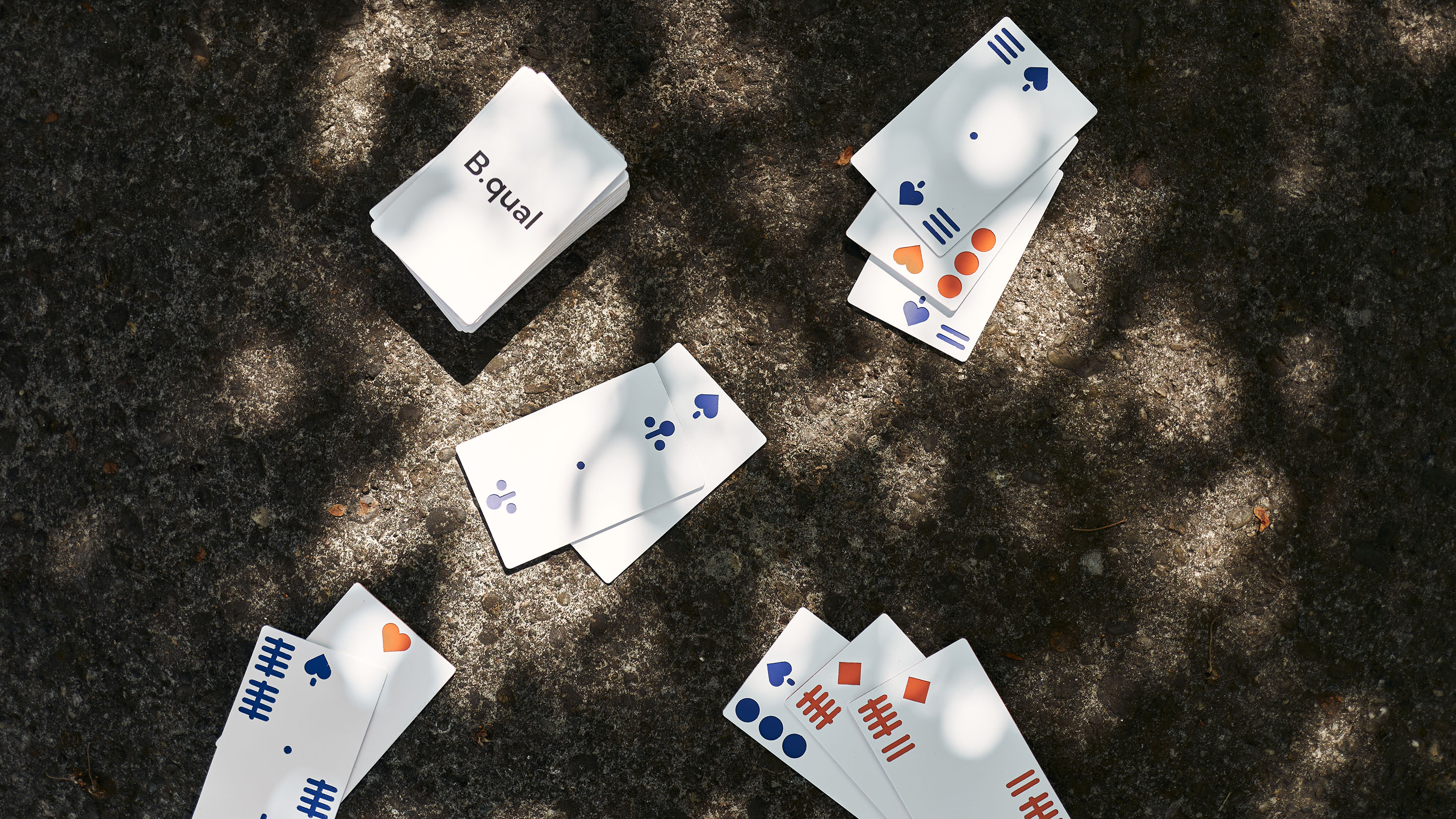
The Playing Cards are constructed from three layers to combine tactile accessibility with visual clarity:
The top layer is cut out, allowing players to feel the number and suit symbol.
The middle layer is color-coded—red or black—so sighted players can identify cards quickly, using a familiar visual language.
The bottom layer forms a uniform back, ensuring a clean, consistent look and preventing unintentional cheating through tactile markings.
To represent numbers, we used a tally mark system—vertical lines grouped in fives. This format is easier to read by touch than spelled-out numbers, while still being intuitive for sighted players.
Face cards (Jack to King) are represented by one to three raised circles, keeping the design minimal and easily distinguishable.
The values are placed in the top left corner, just like in conventional cards—making them both easy to spot and to feel. Suit symbols are stylized and tactically optimized: still recognizable to sighted players, but modified to be clearly differentiated by touch.
For quick color identification, black cards feature a small raised circle in the center—an additional tactile cue that supports fast sorting without sight.
The Playing Cards are constructed from three layers to combine tactile accessibility with visual clarity:
The top layer is cut out, allowing players to feel the number and suit symbol.
The middle layer is color-coded—red or black—so sighted players can identify cards quickly, using a familiar visual language.
The bottom layer forms a uniform back, ensuring a clean, consistent look and preventing unintentional cheating through tactile markings.
To represent numbers, we used a tally mark system—vertical lines grouped in fives. This format is easier to read by touch than spelled-out numbers, while still being intuitive for sighted players.
Face cards (Jack to King) are represented by one to three raised circles, keeping the design minimal and easily distinguishable.
The values are placed in the top left corner, just like in conventional cards—making them both easy to spot and to feel. Suit symbols are stylized and tactically optimized: still recognizable to sighted players, but modified to be clearly differentiated by touch.
For quick color identification, black cards feature a small raised circle in the center—an additional tactile cue that supports fast sorting without sight.
Result